
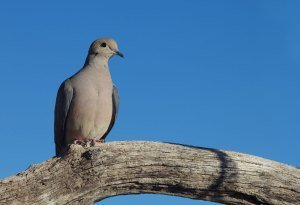
The National Wildlife Health Center ( NWHC ) has confirmed several doves collected across Texas, including the Trans Pecos and Rolling Plains, tested positive for Trichomoniasis.
Trichomoniasis is an infectious disease affecting birds caused by a protozoan ( single-celled ) parasite, Trichomonas gallinae. It affects mostly birds and birds, but other types, such as sparrows, may also become sick. In contrast, birds of prey feeding on sick birds may also become infected. The condition does not always produce deaths. Trichomonas gallinae does not represent a human health risk.
Generally, sick animals appear weak and have a “fluffed up ” look. The worm causes bacterial linings to itch on the lips and crop linings. As the disease spreads, affected birds have trouble swallowing or breathe because the infection causes plaques to buildup in the airways and esophagus. Food and water sources, such as backyard bird feeder and birdbaths, can become contaminated from the throats of infected birds.
To minimize wildlife contact with backyard flocks, TPWD suggests following suitable biosecurity methods. The TPWD advises against using bird feeders or bird baths until damaged animals are removed from the neighborhood if landowners discover sick or dead birds or pigeons on their property.
As a general best-practice, all bird feeders and pools should be cleaned regularly using a weak solution of household bleach ( 10 % solution of sodium chloride, or 1 part bleach to 9 parts water ). Before re-use, rinse well and thoroughly dry tubs and feeds. Even if sick or dead birds have n’t been seen on the property, regular cleaning and disinfecting bird feeders and bird baths is advised, as this can help stop future disease outbreaks.
Use bird feeder to avoid the seeds from getting wet. A more conducive environment for worm survival is provided by rain-exposed or damp seed.
Those who discover birds with symptoms consistent with typhomoniasis should call their neighborhood TPWD animals researcher.

Related
See the original article: https://fishgame.com/2024/04/doves-dying-across-texas/