
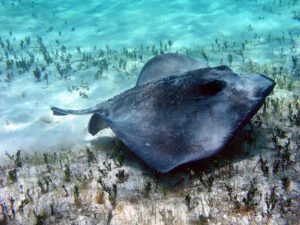
If you’ve ever walked a Texas beach and seen a large, flat shadow glide through the shallows, chances are you’ve seen a stingray. Stingrays are fascinating creatures are abundant along the Gulf Coast, and with the right approach, they can be caught from shore.
And they put up a tremendous fight!
1. Choose the Right Location
Target sandy beaches with troughs and sandbars (e.g., Padre Island, Surfside, or Port Aransas).
Look for areas with slow, sloping drop-offs where rays often feed.
Fish near inlets, jetties, or where the surf breaks gently.
2. Time It Right
Best times: Early morning, late afternoon, or night.
Incoming and outgoing tides are ideal, especially high tide.
Summer and early fall months are peak stingray seasons.
3. Use the Right Gear
Rod/Reel: Medium-heavy surf rod (9–12 feet) with a spinning or conventional reel.
Line: 20–30 lb braided mainline with a 40–60 lb monofilament or fluorocarbon leader.
Hook: 3/0 to 6/0 circle hook.
Weight: 2–5 oz pyramid or spider sinker to hold bottom in surf conditions.
4. Bait Selection
Best baits: Fresh-cut mullet, squid, shrimp, or small chunks of bonito.
Hook the bait firmly so it stays on during long casts and in rough water.
Stingrays prefer natural scent over lures—use fresh, not frozen, bait if possible.
5. Casting and Setup
Cast beyond the breakers into deeper water or just inside the trough.
Place the rod in a sand spike or rod holder.
Set a loose drag or use a bait-runner function to let stingrays run with the bait.
6. Detecting the Bite
Stingrays don’t usually strike hard. Expect slow, steady pulls or your rod tip to dip slowly.
Once the ray takes the bait, let it swim for a few seconds, then apply pressure and start reeling steadily.
7. The Fight
Keep the rod tip up and apply steady pressure.
Don’t jerk—stingrays use their body shape to resist movement, so it may feel like reeling in a heavy board.
Be patient; large rays can tire you out quickly in the surf.
8. Handling and Safety
Use a long-handled dehooker or pliers to remove the hook—do not use your hands.
Stingrays have a venomous barb on their tail. Stay clear of the tail at all times.
If keeping the ray, cut the tail off immediately using a sharp knife (check local regulations first).
If releasing, gently slide the ray back into the surf, keeping clear of the tail.


